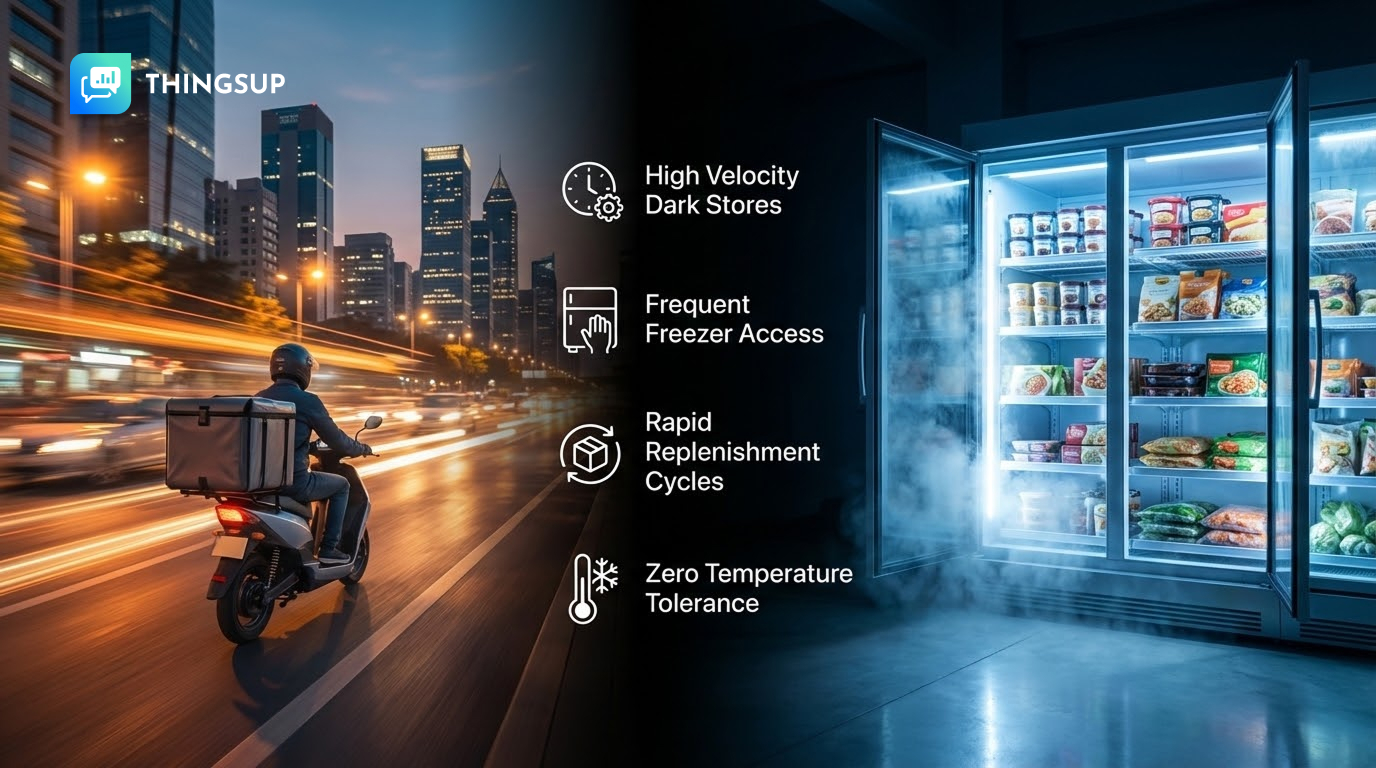
In India, the rise of ultra-fast grocery delivery has been explosive. Players like Blinkit, Swiggy Instamart, Zepto, and BigBasket Fast are redefining customer expectations with delivery windows as short as 10–15 minutes.
However, this rapid growth has created a new operational challenge especially for frozen and temperature-sensitive products.
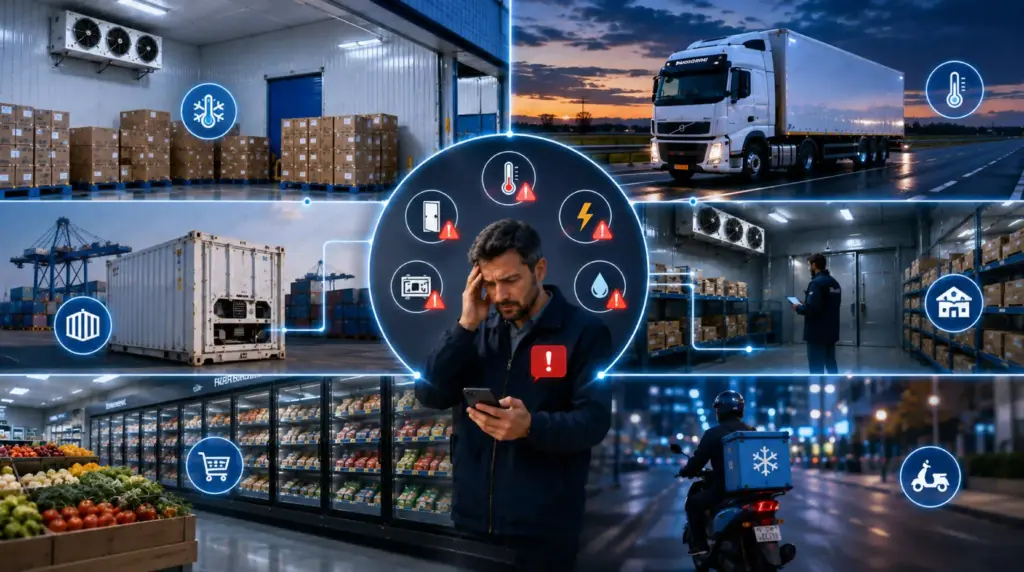
Speed may win the market, but cold chain lapses cost brands money, reputation, and customer trust.
The Indian Quick Commerce Landscape: Speed Meets Complexity
India’s urban consumers are increasingly demanding convenience at lightning speed. According to multiple industry reports:
- Quick commerce players have expanded aggressively into Tier-1 and Tier-2 cities.
- Grocery and frozen categories are among the fastest-growing segments.
- Dark stores and micro-fulfillment centers have become the backbone of last-mile delivery.
But rapid scaling exposes weaknesses in traditional cold chain systems.
Why Frozen Logistics Is a High-Risk Zone in India
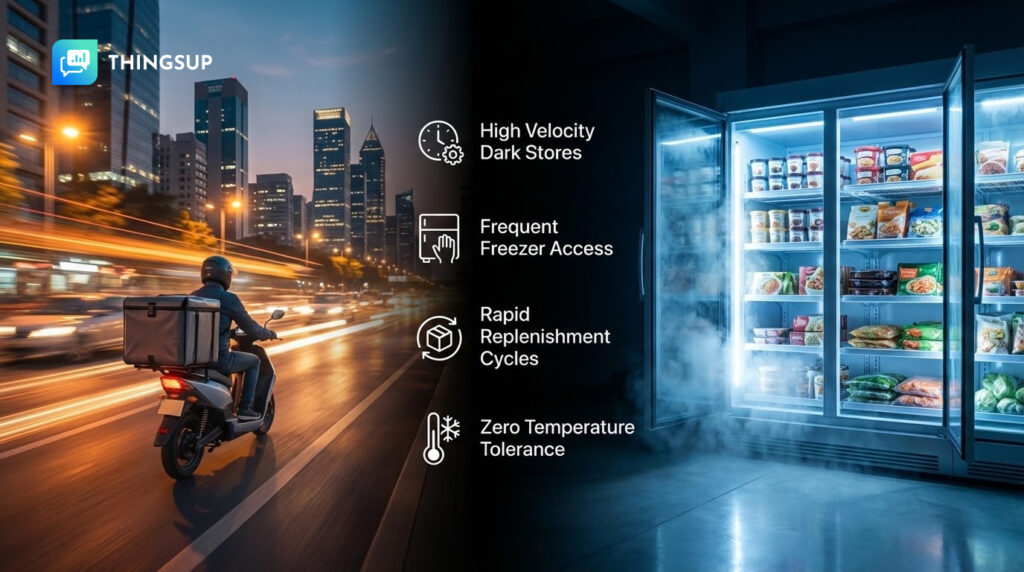
Unlike planned warehouse dispatches, dark stores operate under intense pressure:
- Frequent freezer door openings during peak demand spikes
- High SKU churn with limited dwell time
- Unstable power support in certain locations
- Manual monitoring instead of automated control
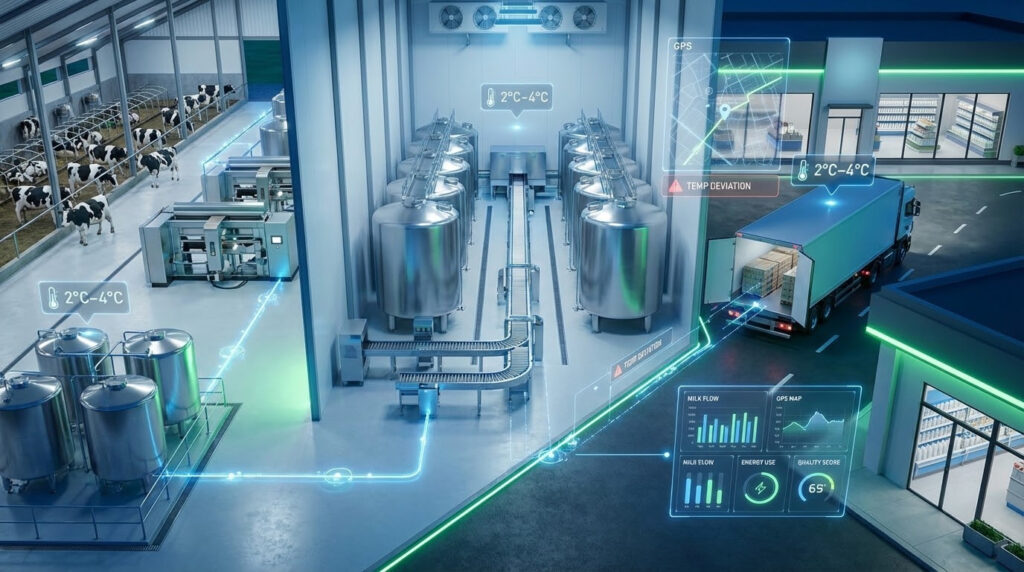
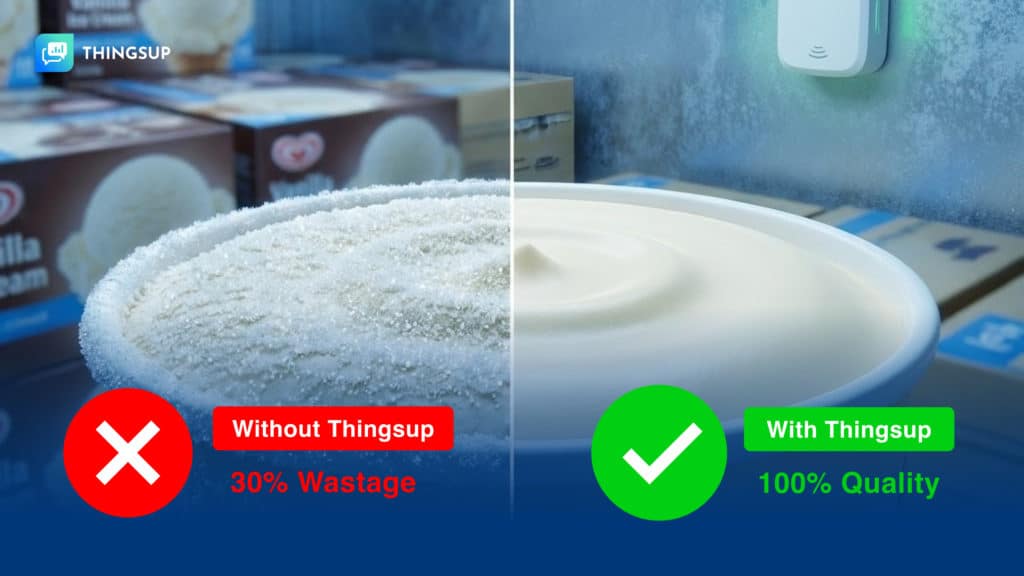
For categories like ice cream, frozen snacks, ready-to-eat meals, and chilled dairy, even short temperature deviations can mean:
- Product spoilage
- Retailer disputes
- Higher return/refund costs
- Regulatory non-compliance
- Brand trust erosion
In a country where margins are tight and competition fierce, these losses are not trivial — they translate directly into bottom-line impact.
The Governance Gap: Speed Outruns Control
In Indian operations, many cold chain strategies are still reactive:
- Manual temperature logs
- Delayed issue detection
- Fragmented visibility across stores
- No audit trail for compliance
Quick commerce moves in minutes; cold chain teams often find out about issues hours too late.
This disconnect is not just an operational inefficiency, it’s a business governance risk.
What Indian Leaders Must Prioritize
Modern quick commerce demands modern cold chain governance. Here’s what top Indian players need to implement:
- Real-Time Temperature Monitoring
Track freezer conditions across every dark store and micro-hub, not just at warehouse level.
- Instant Alerts on Deviations
Automated notifications reduce response times and prevent product loss before it occurs.
- Door & Usage Pattern Analytics
Understand how operator behavior affects freezer performance and risk.
- Centralized Multi-Location Dashboard
Unified visibility across cities from Mumbai to Bangalore to Delhi.
- Compliance-Ready Data Reports
Audit logs for regulatory compliance, insurance claims, and retailer transparency.
India Success Stories: Where Governance Makes a Difference
Forward-thinking quick commerce teams in India have already started winning with better cold chain control:
- Reduced spoilage rates in peak summer months
- Lower refund and return costs for frozen categories
- Faster issue resolution and improved customer experience
- Stronger retailer confidence and bulk order growth
Deliver Fast But Don’t Compromise Control
In India’s competitive quick commerce ecosystem, speed drives growth but control protects it.
Success for Indian grocery and frozen brands will come not from how fast they deliver, but how consistently they protect product integrity at scale.
Operational governance is not optional. It’s strategic.